When you bring an offshore software development partner into your engineering workflow, you are not just hiring extra hands. You are extending access to your codebase, your infrastructure, and in many cases, your customers' data. Yet most CTOs evaluating offshore partners spend the bulk of their due diligence on technical skills, time zone overlap, and pricing models. Security compliance barely makes it onto the checklist.
That is a problem. And it is one that SOC 2 Type II certification was specifically designed to solve.
The Hidden Security Risk of Offshore Development Partnerships
When you engage an offshore software development partner, their engineers typically receive access to your version control systems, cloud environments, internal tools, and sometimes production data. That access does not come with automatic oversight. Unless your partner has demonstrated, through independent audit, that they manage access controls, incident response, background verification, and data handling to a defined standard, you are essentially trusting a verbal assurance.
This is precisely why enterprise procurement teams and CTOs at mid-market companies now ask a very specific question during vendor evaluation: does my offshore development partner need SOC 2 compliance? The answer, increasingly, is yes, especially if your own product touches regulated data or if your company operates in fintech, healthcare, SaaS, or any domain where your clients hold you accountable for third-party risk.
What SOC 2 Type II Actually Means
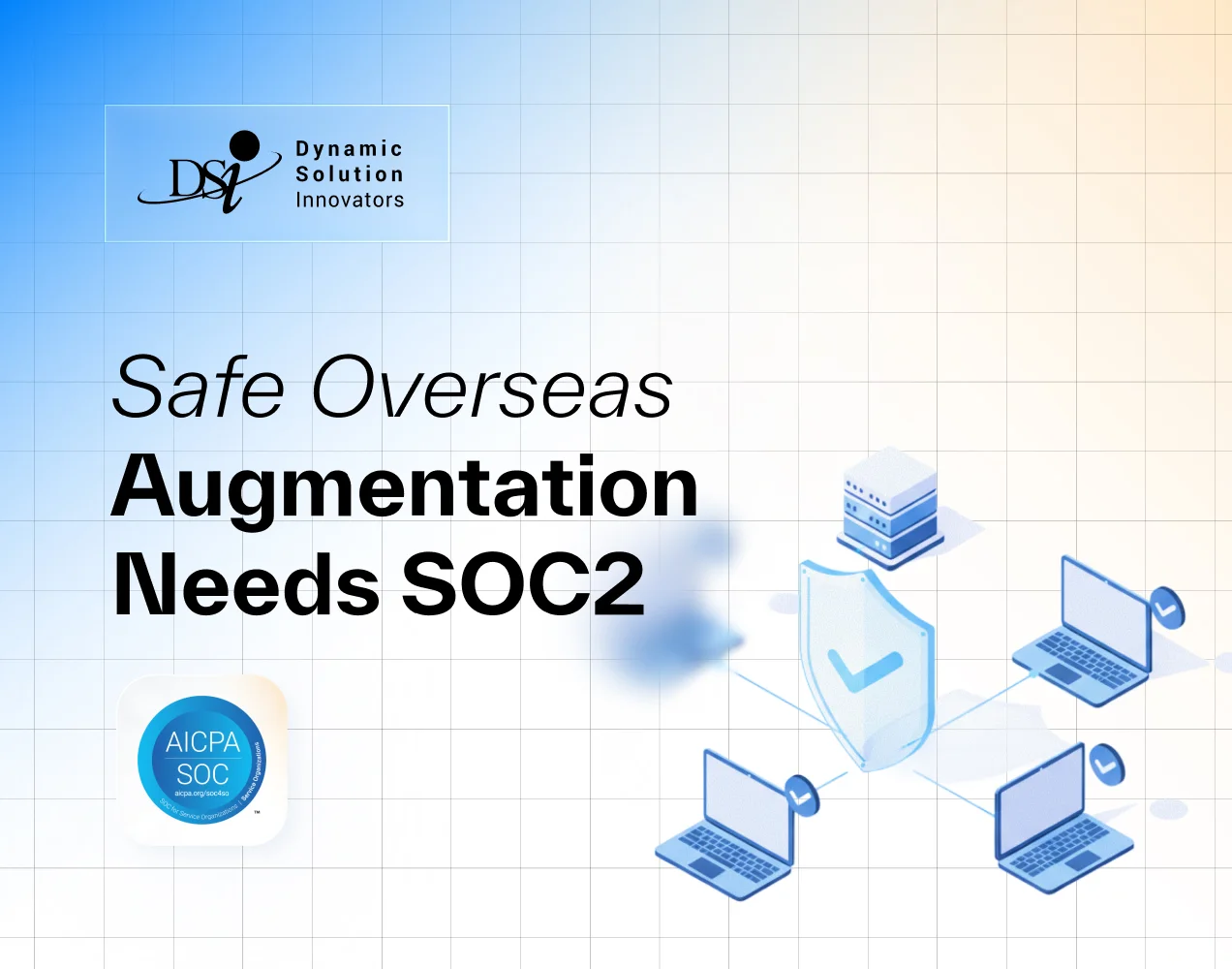
SOC 2 (System and Organization Controls 2) is an auditing framework developed by the American Institute of Certified Public Accountants (AICPA). It evaluates a service organization against five Trust Services Criteria: Security, Availability, Processing Integrity, Confidentiality, and Privacy.
There are two types.
SOC 2 Type I verifies that the right controls exist at a specific point in time. It is a snapshot.
SOC 2 Type II goes significantly further. It verifies that those controls operated effectively over an extended observation period, typically 6 to 12 months. An independent CPA firm reviews actual evidence: access logs, change management records, incident response history, HR procedures, and vendor agreements.
For companies evaluating an offshore software development partner, this distinction matters. Type II means your partner is not just claiming to have a security policy. They have proven they follow it, consistently, under third-party scrutiny.
Why It Is Rare, and Why That Matters
SOC 2 Type II compliance is still uncommon among offshore software development providers. Achieving it requires significant investment of time, money, and organizational discipline. It demands that a company hold itself accountable, documenting gaps, fixing them, and inviting an auditor to verify the results over a sustained period.
Most providers are not willing to go through it. Which means that when you find one that has, you can reasonably infer several things: they have structured internal processes, they take data governance seriously, and they operate with the kind of transparency that makes long-term partnerships viable.
For CTOs who have asked how to verify the security compliance of an offshore software development company, a SOC 2 Type II report is one of the clearest answers available. It is a standardized, auditor-verified document, not a self-reported questionnaire.
What SOC 2 Type II Covers in an Offshore Development Context
SOC 2 Type II compliance in the context of an offshore software development partner covers things that directly affect your risk exposure.
Access management. Are credentials provisioned based on minimum necessary access? Are they revoked immediately upon offboarding? SOC 2 audits specifically examine this.
Background verification. Are engineers screened before they receive access to client systems? A compliant partner will have documented HR procedures for this.
Incident response. If something goes wrong, a data exposure or an unauthorized access event, does your partner have a defined protocol and the ability to notify you within a required timeframe?
Subcontractor oversight. Many offshore providers use subcontractors. SOC 2 requires the primary provider to extend their compliance framework to any third party handling client data.
Physical and logical security. From office access controls to network segmentation and encryption policies, SOC 2 evaluates the full environment your offshore engineers work in.
Questions to Ask Any Offshore Software Development Partner About Security
If you are in the process of evaluating partners, these questions will tell you whether security is an operational reality or a marketing claim.
Are you SOC 2 Type II certified? If so, can you share the executive summary of the report? This is the baseline filter. A certified partner can produce the report on request. One that cannot is either uncertified or unwilling to be transparent, both of which are red flags. The executive summary is shareable without exposing sensitive internal control details, so there is no legitimate reason to withhold it.
What is your process for provisioning and revoking system access for engineers on client projects? Access provisioning and offboarding failures are among the most common control gaps found during SOC 2 audits. You want to hear a specific, documented process, not a general assurance. If an engineer leaves the project, how quickly is their access revoked? Who owns that process? The answer tells you whether their access management is repeatable or ad hoc.
Have you experienced any security incidents in the past 24 months, and how were they handled? A mature partner will have a documented incident log and a clear response timeline. A partner who says they have never had an incident is either very new or not monitoring closely enough to know. What you are really evaluating here is their incident response culture, how transparent they are, how quickly they act, and whether they notify clients proactively.
How do you manage engineers who work across multiple client environments? Engineers who simultaneously hold access to multiple clients' systems represent a real cross-contamination risk. SOC 2 requires logical separation of client data and access. This question probes whether that separation exists in practice, not just on paper. Listen for specifics around separate credentials, environment isolation, and access review cycles.
What background verification process do engineers go through before client onboarding? For an offshore software development partner specifically, this matters because you often have no direct visibility into who is sitting behind the keyboard with access to your systems. A SOC 2 compliant partner will have documented, consistent screening procedures applied before any engineer touches a client environment, not after.
Do your subcontractors or third-party vendors go through the same security controls as your internal engineers? Many offshore software development companies use subcontractors for overflow capacity or specialist skills. SOC 2 requires the primary provider to extend their compliance framework to any third party handling client data, but not every provider actually does this in practice. If your partner cannot answer this clearly, their compliance boundary may be narrower than you assume.
DSi Is Now SOC 2 Type II Audited
Dynamic Solution Innovators (DSi) has completed SOC 2 Type II Audit. It is an independent attestation that our security controls, data handling procedures, and operational practices meet the AICPA's Trust Services Criteria, sustained over time.
For our clients, engineering teams at mid-market companies across North America and Europe, this means your IP, your infrastructure access, and your customer data are handled by an offshore software development partner with documented, proven controls. Not a verbal commitment. A verified one.
If security compliance is on your checklist when evaluating offshore software development partners, we would welcome the conversation. Talk to the DSi team →