Hire GraphQL Engineering
for unified data access
From schema-first design and federation to subscriptions and real-time data, our GraphQL engineers build
flexible, performant API layers that give clients exactly the data they need.
Schema-first design with SDL, code-first with TypeGraphQL & Hot Chocolate
Query optimization, persisted queries & automatic persisted queries (APQ)
Apollo Federation & GraphQL mesh for microservices data stitching
Real-time subscriptions with WebSockets & Server-Sent Events
Security with query depth limiting, rate limiting & persisted operations
Core Capabilities
What we build
with GraphQL
with GraphQL
Unified API
Layer
Single endpoint, multiple sources
A single GraphQL endpoint aggregating data from REST APIs, databases, gRPC services, and third-party systems, giving frontend teams the flexibility to request exactly what they need.

Federation &
Microservices
Distributed and composable
Apollo Federation and GraphQL Mesh supergraphs that stitch together data from multiple microservices into one coherent graph, enabling independent team ownership of subgraph schemas.

Real-Time
Subscriptions
Live data and event-driven
GraphQL subscriptions over WebSockets, delivering real-time updates for dashboards, chat, notifications, and collaborative features with automatic reconnection and error handling.

How It Works
From architecture to
production
production

Schema Design &
Federation
Federation
We design the GraphQL schema with your domain experts, define types, queries, mutations, and subscriptions, and plan the federation strategy for multi-service architectures.

Agile
Development
Development
Our enterprise
solution engineers work in 2-week sprints with continuous integration and demo cycles. You see
working APIs every step of the way.
Testing &
CI/CD
CI/CD
Comprehensive test suites with Jest, Vitest, and integration tests. Our QA
specialists and DevOps engineers ensure every schema change is validated against client queries before deployment.

Deployment &
Monitoring
Monitoring
Apollo Studio and GraphOS for schema registry, operation monitoring, and field-level tracing. Production observability with OpenTelemetry, Prometheus, and Grafana dashboards.
Hire GraphQL Developers
GraphQL engineers ready
to join your team
Accelerate your API development with dedicated GraphQL developers who design efficient, client-centric data APIs from day one.
Why product Enhancement
Improve with intent,
not impulse
not impulse
'%3e%3cpath%20fill-rule='evenodd'%20clip-rule='evenodd'%20d='M15.5539%2038L0%2028.9709L11.4641%209.0291L27.027%2018.0426L27.0358%200H49.9642L49.973%2018.0426L65.5358%209.0291L77%2028.9709L61.446%2038L77%2047.0291L65.5358%2066.9709L49.973%2057.9575L49.9642%2076H27.0358L27.027%2057.9575L11.4641%2066.9709L0%2047.0291L15.5539%2038Z'%20fill='var(--fill-0,%20white)'/%3e%3cpath%20fill-rule='evenodd'%20clip-rule='evenodd'%20d='M15.5539%2038L0%2028.9709L11.4641%209.0291L27.027%2018.0426L27.0358%200H49.9642L49.973%2018.0426L65.5358%209.0291L77%2028.9709L61.446%2038L77%2047.0291L65.5358%2066.9709L49.973%2057.9575L49.9642%2076H27.0358L27.027%2057.9575L11.4641%2066.9709L0%2047.0291L15.5539%2038Z'%20fill='url(%23paint0_radial_0_14)'%20fill-opacity='0.5'/%3e%3cpath%20fill-rule='evenodd'%20clip-rule='evenodd'%20d='M15.5539%2038L0%2028.9709L11.4641%209.0291L27.027%2018.0426L27.0358%200H49.9642L49.973%2018.0426L65.5358%209.0291L77%2028.9709L61.446%2038L77%2047.0291L65.5358%2066.9709L49.973%2057.9575L49.9642%2076H27.0358L27.027%2057.9575L11.4641%2066.9709L0%2047.0291L15.5539%2038Z'%20fill='url(%23paint1_linear_0_14)'%20fill-opacity='0.93'/%3e%3c/g%3e%3cdefs%3e%3cfilter%20id='filter0_n_0_14'%20x='0'%20y='0'%20width='77'%20height='76'%20filterUnits='userSpaceOnUse'%20color-interpolation-filters='sRGB'%3e%3cfeFlood%20flood-opacity='0'%20result='BackgroundImageFix'/%3e%3cfeBlend%20mode='normal'%20in='SourceGraphic'%20in2='BackgroundImageFix'%20result='shape'/%3e%3cfeTurbulence%20type='fractalNoise'%20baseFrequency='1%201'%20stitchTiles='stitch'%20numOctaves='3'%20result='noise'%20seed='4161'%20/%3e%3cfeColorMatrix%20in='noise'%20type='luminanceToAlpha'%20result='alphaNoise'%20/%3e%3cfeComponentTransfer%20in='alphaNoise'%20result='coloredNoise1'%3e%3cfeFuncA%20type='discrete'%20tableValues='0%200%200%200%200%200%201%201%201%201%201%201%201%201%201%201%201%201%201%201%201%201%201%201%201%201%201%201%201%201%201%201%201%201%201%201%201%201%201%201%201%201%201%201%200%200%200%200%200%200%200%200%200%200%200%200%200%200%200%200%200%200%200%200%200%200%200%200%200%200%200%200%200%200%200%200%200%200%200%200%200%200%200%200%200%200%200%200%200%200%200%200%200%200%200%200%200%200%200%200%20'/%3e%3c/feComponentTransfer%3e%3cfeComposite%20operator='in'%20in2='shape'%20in='coloredNoise1'%20result='noise1Clipped'%20/%3e%3cfeComponentTransfer%20in='alphaNoise'%20result='coloredNoise2'%3e%3cfeFuncA%20type='discrete'%20tableValues='0%200%200%200%200%200%200%200%200%200%200%200%200%200%200%200%200%200%200%200%200%200%200%200%200%200%200%200%200%200%200%200%200%200%200%200%200%200%200%200%200%200%200%200%200%200%200%200%200%200%200%200%200%200%200%200%201%201%201%201%201%201%201%201%201%201%201%201%201%201%201%201%201%201%201%201%201%201%201%201%201%201%201%201%201%201%201%201%201%201%201%201%201%201%200%200%200%200%200%200%20'/%3e%3c/feComponentTransfer%3e%3cfeComposite%20operator='in'%20in2='shape'%20in='coloredNoise2'%20result='noise2Clipped'%20/%3e%3cfeFlood%20flood-color='rgba(21,%200,%20255,%200.05)'%20result='color1Flood'%20/%3e%3cfeComposite%20operator='in'%20in2='noise1Clipped'%20in='color1Flood'%20result='color1'%20/%3e%3cfeFlood%20flood-color='rgba(255,%20255,%20255,%200)'%20result='color2Flood'%20/%3e%3cfeComposite%20operator='in'%20in2='noise2Clipped'%20in='color2Flood'%20result='color2'%20/%3e%3cfeMerge%20result='effect1_noise_0_14'%3e%3cfeMergeNode%20in='shape'%20/%3e%3cfeMergeNode%20in='color1'%20/%3e%3cfeMergeNode%20in='color2'%20/%3e%3c/feMerge%3e%3c/filter%3e%3cradialGradient%20id='paint0_radial_0_14'%20cx='0'%20cy='0'%20r='1'%20gradientTransform='matrix(43.4907%2073.6862%20-120.374%2014.0364%2038.5%2010.8212)'%20gradientUnits='userSpaceOnUse'%3e%3cstop%20stop-color='%234879FF'/%3e%3cstop%20offset='0.721154'%20stop-color='%23EFF4F8'/%3e%3cstop%20offset='1'%20stop-color='white'/%3e%3c/radialGradient%3e%3clinearGradient%20id='paint1_linear_0_14'%20x1='10.7574'%20y1='76'%20x2='18.6876'%20y2='34.5614'%20gradientUnits='userSpaceOnUse'%3e%3cstop%20stop-color='%23FF596F'/%3e%3cstop%20offset='1'%20stop-color='white'%20stop-opacity='0'/%3e%3c/linearGradient%3e%3c/defs%3e%3c/svg%3e)
'%3e%3cpath%20d='M24.6667%2015.6667C24.1497%2014.114%2023.2781%2012.703%2022.1209%2011.5458C20.9637%2010.3886%2019.5527%209.517%2018%209.00004C19.5527%208.48308%2020.9637%207.61144%2022.1209%206.45424C23.2781%205.29703%2024.1497%203.88611%2024.6667%202.33337C25.1836%203.88611%2026.0553%205.29703%2027.2125%206.45424C28.3697%207.61144%2029.7806%208.48308%2031.3333%209.00004C29.7806%209.517%2028.3697%2010.3886%2027.2125%2011.5458C26.0553%2012.703%2025.1836%2014.114%2024.6667%2015.6667ZM12.6667%2031.6667C11.8387%2029.1828%2010.4438%2026.9257%208.59237%2025.0743C6.74097%2023.2229%204.48393%2021.828%202%2021C4.48393%2020.1721%206.74097%2018.7772%208.59237%2016.9257C10.4438%2015.0743%2011.8387%2012.8173%2012.6667%2010.3334C13.4946%2012.8173%2014.8896%2015.0743%2016.741%2016.9257C18.5924%2018.7772%2020.8494%2020.1721%2023.3333%2021C20.8494%2021.828%2018.5924%2023.2229%2016.741%2025.0743C14.8896%2026.9257%2013.4946%2029.1828%2012.6667%2031.6667Z'%20stroke='black'%20stroke-width='2.66667'%20stroke-linecap='round'%20stroke-linejoin='round'/%3e%3c/g%3e%3cdefs%3e%3cclipPath%20id='clip0_6321_47690'%3e%3crect%20width='32'%20height='32'%20fill='white'%20transform='translate(0.666626%201)'/%3e%3c/clipPath%3e%3c/defs%3e%3c/svg%3e)
AI-assisted
schema review
schema review
AI tools review GraphQL schemas for best practices, catch N+1 resolver issues, and validate schema changes against existing frontend queries to prevent breaking changes.


AI-powered
testing
testing
Automated test generation for GraphQL resolvers, mutations, and subscriptions, generating realistic query patterns and edge cases from schema introspection.


Query
optimization
optimization
AI-driven analysis of query complexity, DataLoader batching efficiency, and resolver performance, identifying optimization opportunities across the graph.


Intelligent
automation
automation
AI-generated GraphQL SDL from REST API documentation, automatic resolver scaffolding, and smart code generation for type-safe client SDK generation with codegen.
FAQ
Frequently Asked
Questions
GraphQL eliminates over-fetching and under-fetching by letting clients specify exactly what data they need. It provides a strongly typed schema, reduces the number of API round trips, and enables frontend and backend teams to work independently with schema as the contract.
We work with Apollo Server (Node.js), Hot Chocolate (.NET), GraphQL-Java (Spring Boot), Yoga, Mercurius (Fastify), and Hasura (Postgres-to-GraphQL). We choose based on your existing stack and performance requirements.
We use DataLoader for batching and caching, persisted queries to reduce payload size, query complexity analysis with depth limits, response caching with Redis, and Apollo Federation for distributing load across services.
Yes. We design supergraph architectures with Apollo Federation v2, Rover CLI for schema composition, and GraphOS for managed federation. This allows independent teams to own their subgraphs while presenting a unified API.
We implement query depth limiting, rate limiting, persisted operations (trusted document lists), field-level authorization with directives, JWT and OAuth2 integration, and schema-level access control to prevent introspection abuse.

LET'S CONNECT
Ready to scale
your product?
your product?
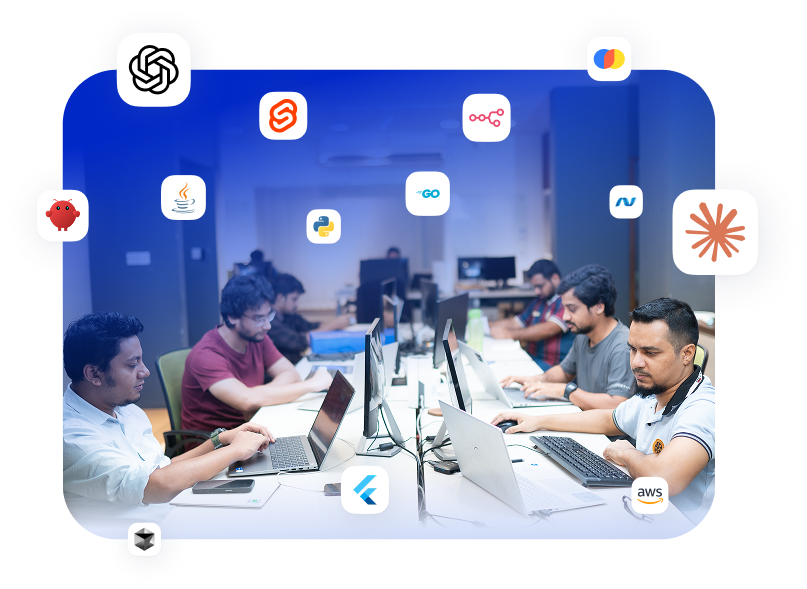
Book a session to discuss your GraphQL project with our engineering leadership.